
Intricate 18th Century German Door Shows Off Great Workmanship

Intricate 18th Century German Door Shows Off Great Workmanship

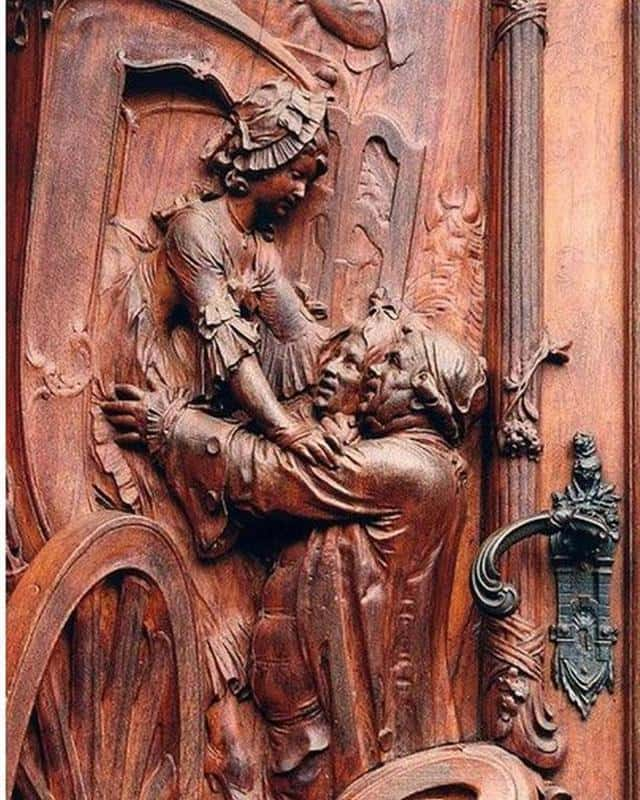
Woodworking has always been a very important part of everyday life regardless of your status in life. Everyone, rich or poor, needs doors, after all. By the 1700s, the art of woodworking already involved more than just the creation of a barrier between the elements and a person. Artisans were already spending long hours into the creation of lovely pieces of furniture that was not only functional but also lovely to look at! The Germans have always loved woodworking, but similar designs have also been seen in colonial American furniture because of the high numbers of German immigrants who flew across the pond in the past.
Intricate 18th Century German Door Shows Off Great Workmanship

Intricate 18th Century German Door Shows Off Great Workmanship

Comments

Popular posts from this blog

An Incredible Photo Of A Tree Growing Out Of A Piano

An Incredible Photo Of A Tree Growing Out Of A Piano Take a look at this piano tree – no, we promise you that this was not photoshopped. Could someone have dropped a piano in the woods and then let this tree crack through the instrument? Maybe the piano was sawed in half and then arranged around the tree. This was discovered in the woods close to the California State University, Monterey Bay. The truth was that a college student by the name of Jeff placed the instrument around the tree. We are sure that it took a lot of hard work on his end! Sadly, you cannot go looking around for it since the piano has since been removed from the tree. An Incredible Photo Of A Tree Growing Out Of A Piano

An Ottoman Supply Train Of The Hejaz Railway In The Desert

An Ottoman Supply Train Of The Hejaz Railway In The Desert There were a lot of incredible feats of bravery that happened during the Great War. One of the most famous ones was that of T.E. Lawrence, better known as Lawrence of Arabia. He had been posted in the Middle East in 1917 when he started to topple the trains serving the Ottoman supply chain with a crew of Arabs. When the war came to a close, they had destroyed so much railroad and trains that they could no longer be used. Instead of moving the vacated trains, the Turkish people just abandoned them there. An Ottoman Supply Train Of The Hejaz Railway In The Desert

This Music Typewriter Had A Circular Keyboard With 33 Keys

This Music Typewriter Had A Circular Keyboard With 33 Keys The Keaton Music Typewriter was patented in 1936 and came with 14 keys. By the ‘50s, it received an update and started to feature 33 keys! The typewriter worked by putting a sheet below the typing mechanism and then the notation marker would begin to type. It might sound complicated, but the truth was that the musical typewriters made it easier to write sheet music. However, it was important for the composer to work very carefully since they needed to start over with a new sheet if they made a mistake. The machine had 3 space keys that let users move the typehead through the units. This Music Typewriter Had A Circular Keyboard With 33 Keys