
The Wreckage Of A Kittyhawk P-40 In The Sahara Desert

The Wreckage Of A Kittyhawk P-40 In The Sahara Desert

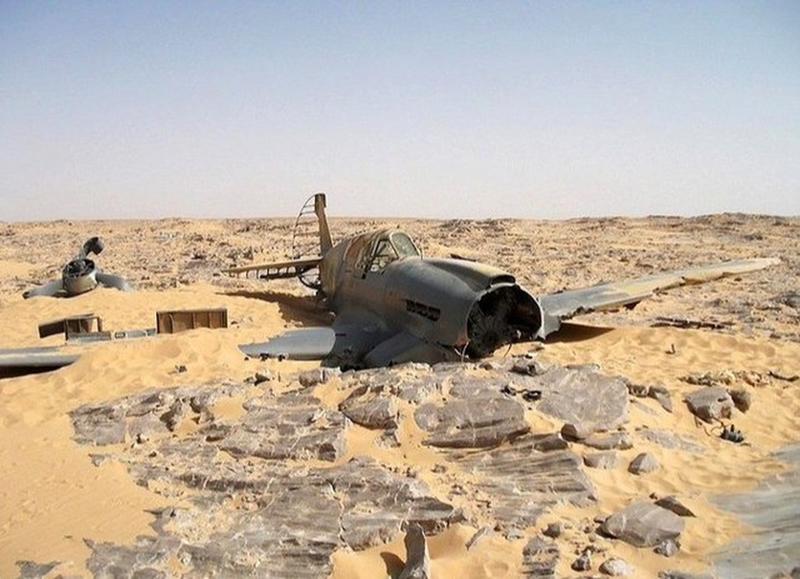
The Curtiss P-40 Kittyhawk was like the British Tomahawk, the American fighter jet that debuted during the Second World War. The P-40 came with an Allison in-line piston engine that was able to go up to a speed of 378 miles per hour. It could achieve an altitude of 15,000 ft in only 6 minutes and 42 seconds. However, the range was only 240 miles, which meant that it mostly functioned as a defensive plane. In June 1942, the Kittyhawk flown by 24-year-old Flt. Sgt. Dennis Copping crashed in the North African desert, 200 miles away from the closest town. It remained there undisturbed until a Polish oil company worker found it in May 2012. Unfortunately, the fate of the pilot remains a mystery to this day.
The Wreckage Of A Kittyhawk P-40 In The Sahara Desert

The Wreckage Of A Kittyhawk P-40 In The Sahara Desert

Comments

Popular posts from this blog

An Incredible Photo Of A Tree Growing Out Of A Piano

An Incredible Photo Of A Tree Growing Out Of A Piano Take a look at this piano tree – no, we promise you that this was not photoshopped. Could someone have dropped a piano in the woods and then let this tree crack through the instrument? Maybe the piano was sawed in half and then arranged around the tree. This was discovered in the woods close to the California State University, Monterey Bay. The truth was that a college student by the name of Jeff placed the instrument around the tree. We are sure that it took a lot of hard work on his end! Sadly, you cannot go looking around for it since the piano has since been removed from the tree. An Incredible Photo Of A Tree Growing Out Of A Piano

An Ottoman Supply Train Of The Hejaz Railway In The Desert

An Ottoman Supply Train Of The Hejaz Railway In The Desert There were a lot of incredible feats of bravery that happened during the Great War. One of the most famous ones was that of T.E. Lawrence, better known as Lawrence of Arabia. He had been posted in the Middle East in 1917 when he started to topple the trains serving the Ottoman supply chain with a crew of Arabs. When the war came to a close, they had destroyed so much railroad and trains that they could no longer be used. Instead of moving the vacated trains, the Turkish people just abandoned them there. An Ottoman Supply Train Of The Hejaz Railway In The Desert

This Music Typewriter Had A Circular Keyboard With 33 Keys

This Music Typewriter Had A Circular Keyboard With 33 Keys The Keaton Music Typewriter was patented in 1936 and came with 14 keys. By the ‘50s, it received an update and started to feature 33 keys! The typewriter worked by putting a sheet below the typing mechanism and then the notation marker would begin to type. It might sound complicated, but the truth was that the musical typewriters made it easier to write sheet music. However, it was important for the composer to work very carefully since they needed to start over with a new sheet if they made a mistake. The machine had 3 space keys that let users move the typehead through the units. This Music Typewriter Had A Circular Keyboard With 33 Keys